
Your building’s exterior is much more than a first impression; it is the primary defense against the relentless moisture of the Pacific Northwest. Does your property currently look as professional as the services you provide to your clients? It’s natural to feel a bit overwhelmed by the technical side of commercial building exterior painting. You might worry about business disruptions during the process or feel confused by the endless variety of specialized coatings available today.
We understand those hesitations. You want a revitalized look without the headache of a disorganized job site or unexpected structural damage. This guide is designed to help you protect your investment and gain a clear understanding of the long-term ROI that comes with expert maintenance. You will discover how the right approach prevents costly masonry failure and rot while ensuring your project stays compliant with the latest May 2026 OSHA Hazard Communication Standard updates. Let’s look at how a strategic refresh can provide the structural defense and polished aesthetic your building deserves.
Key Takeaways
- Learn how a multi-layered protective system shields your building from structural decay while boosting tenant trust and curb appeal.
- Discover why commercial building exterior painting requires specific coatings for different substrates to avoid the common pitfalls of “one size fits all” applications.
- Understand the professional cleaning and preparation steps that ensure your new finish stays vibrant and bonded for years to come.
- Find out how choosing the right colors and Light Reflectance Values can strengthen your brand identity and help manage your building’s energy costs.
- Get practical tips for scheduling your project during ideal weather windows to minimize disruption to your daily business operations.
Why Commercial Building Exterior Painting is Your Best Maintenance Strategy
Think of this process as a structural shield. Neglecting the exterior doesn’t just hurt your image; it invites decay. Professional house painters and decorators have long understood that the right finish does more than look good; it seals the envelope of the building. A proactive approach to maintenance ensures that your investment remains secure while providing a significant return through avoided repairs.
The Aesthetic Impact on Business Reputation
Does a fading, peeling facade send the right message? To a potential tenant or a new client, a neglected exterior subconsciously signals poor management. It’s about trust. A crisp, modern look increases property value and helps with tenant retention. Imagine a dated, grey warehouse. With the right color palette and professional application, that same building can be transformed into a high-end, inviting storefront that attracts premium foot traffic. Your building is often the first “handshake” a customer experiences. Make sure it’s a firm one.
To maximize that first impression, many property owners choose to coordinate their painting projects with professional grounds improvements. For those looking for inspiration or expert services in full-service landscape contracting, Artech Landscaping & Construction offers comprehensive solutions that enhance curb appeal from the ground up.
Just as landscaping enhances curb appeal, professional tree management is essential for protecting your building’s structure and visibility. For those in the Pacific Northwest, CDA TREE AND UTILITY provides expert tree care that ensures your property remains safe and inviting.
Painting as a Structural Defense Mechanism
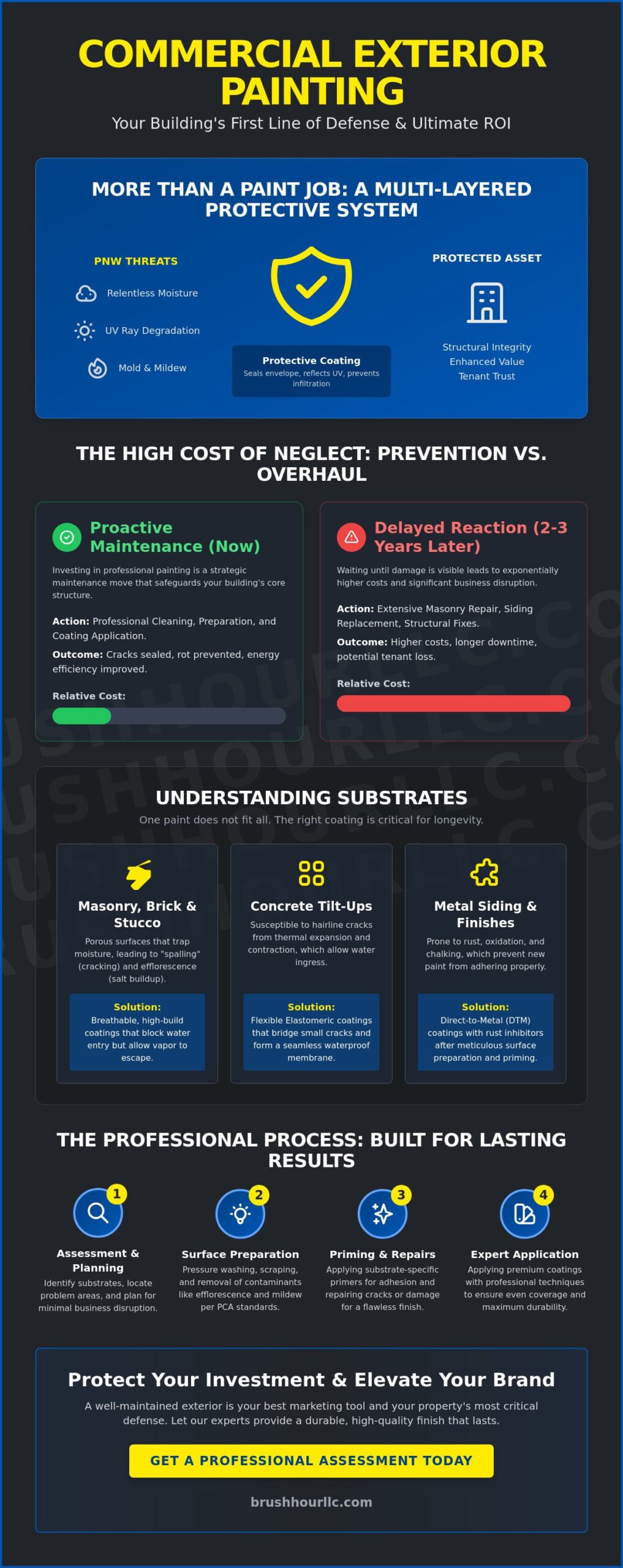
In Vancouver and Battle Ground, moisture is the constant enemy. Persistent rain leads to water infiltration, which can cause masonry to crack or “spall.” This happens when water enters the pores of brick or concrete. A high-quality coating seals these microscopic entry points. Consider the timeline. Investing in commercial building exterior painting in 2026 is a smart maintenance move. If you wait until 2028, you might be looking at a full siding replacement or extensive masonry repair. The cost of prevention is always lower than the cost of a total overhaul. By sealing cracks and preventing rot now, you protect the skeletal integrity of your building for the long haul. This comprehensive care is similar to how specialists like Cascade Outdoor Services approach structural outdoor construction and restoration to keep property features durable and safe.
Understanding Substrates: What is Under Your Building’s Paint?
What exactly is holding up your building’s color? In Vancouver and Battle Ground, commercial properties range from historic downtown brick to modern concrete tilt-up warehouses. Each material has its own personality. Treating them all with the same bucket of paint is a recipe for disaster. Effective commercial building exterior painting requires a deep understanding of chemical bonding. If you apply a standard latex to an unprimed metal siding, it will peel within a season. Even worse, using a non-breathable coating on porous masonry can trap moisture, leading to internal rot or surface spalling.
In our Pacific Northwest climate, the north-facing side of a building often stays damp for months. This creates a perfect breeding ground for moss and mildew. If your current coating isn’t designed to handle this moisture cycle, you’ll see bubbling and premature failure. The goal is to create a finish that allows the building to “breathe” while keeping external water out. If you are unsure which material your property uses, a professional assessment can help identify the best path forward for your specific substrate.
Masonry, Brick, and Concrete Tilt-Ups
Brick and concrete are basically sponges. They absorb water during our long rainy seasons. If that moisture can’t escape, it causes efflorescence, which is that white, powdery salt buildup you often see on older walls. Following PCA Industry Standards for surface preparation ensures these salts are removed before the first drop of paint is applied. For concrete tilt-ups, we often recommend elastomeric coatings. These high-build finishes are incredibly flexible. This allows them to bridge small hairline cracks while providing a waterproof seal that moves with the building as temperatures change.
Metal Siding and Industrial Finishes
The Professional Process: More Than Just a Fresh Coat
Did you know that nearly 70% of a successful project happens before a single drop of paint is applied? It sounds surprising, but the secret to long-lasting commercial building exterior painting lies in the “invisible” work. If you skip the prep, you’re essentially painting over a failure waiting to happen. Professional crews follow strict Painting Contractors Association (PCA) industry standards to ensure every surface is ready to bond with its new coating. This methodical approach is what separates a quick fix from a decade of protection.
This process includes meticulous caulking and sealing. Why is this so important? In our wet climate, even a tiny gap around a window frame can let in enough moisture to cause internal rot. By sealing these joints, we aren’t just making the building look better; we’re reinforcing its structural integrity. For older Vancouver properties built before 1978, we also prioritize lead-safe practices. Following EPA Lead Renovation, Repair and Painting (RRP) rules isn’t just about compliance; it’s about keeping your employees and the public safe during the renovation. It’s a level of care that ensures your business stays protected from both the elements and regulatory fines.
Commercial Preparation Checklist
How do we ensure a seamless finish? It starts with a clean slate. Industrial power washing is essential to blast away PNW moss, algae, and urban pollutants that cling to your walls. Once dry, we move to scraping and sanding. We feather the edges of any remaining old paint to ensure the new layer lays flat and smooth. Throughout this stage, we take great care to protect your landscaping, parking lots, and signage. You shouldn’t have to worry about overspray on a client’s car or paint on your manicured bushes. A clean job site is just as important as a clean wall.
High-Performance Coating Selection
Which coating is right for your facility? Not all paints are created equal. High-durability acrylics are excellent for flexibility, while epoxy and urethane finishes offer superior chemical resistance for industrial settings. If your building stays occupied during the project, low-VOC (Volatile Organic Compounds) options are vital. These products reduce odors and ensure a healthier environment for your staff and customers. For a deeper look at how these choices impact your bottom line, explore our commercial painting service guide. Choosing the right product ensures your commercial building exterior painting remains a professional asset for years to come. Once your exterior is protected, many Vancouver business owners also turn their attention inward — a comprehensive approach to commercial building interior painting can boost employee morale and reinforce your brand identity throughout every workspace.
Selecting the Right Commercial Exterior Colors and Finishes
Choosing a color scheme for your property is about more than just personal preference. It’s a strategic business decision. How do you want your clients to feel when they pull into your parking lot? Effective commercial building exterior painting aligns your physical presence with your brand identity. If your logo features a specific shade of blue, incorporating that color into your accents creates immediate recognition. You should also consider color psychology. Deep blues often project stability and trust, while earthy greens can signal growth and sustainability. Your building’s appearance acts as a silent ambassador for your values.
The science of Light Reflectance Value (LRV) is another critical factor. LRV measures the percentage of light a color reflects versus how much it absorbs. Why does this matter for your bottom line? Colors with a high LRV reflect more sunlight, which helps keep your building cooler and reduces energy costs during the summer. In Vancouver and Battle Ground, it’s also important to check local aesthetic standards. Some commercial zones have specific requirements regarding brightness or color palettes to ensure community cohesion. If you’re ready to see how these factors come together for your property, contact a professional painting contractor for a tailored color consultation.
Balancing Brand and Environment
How do you make a building stand out without clashing with its surroundings? The 2026 trend for local offices favors neutral bases paired with bold, saturated accents. This approach allows your building to look professional against the often gray Pacific Northwest sky while still highlighting architectural features or main entrances. To ensure these features remain visible and striking at night, you can discover LED Artistry for custom architectural lighting systems. Using a warm neutral for the bulk of the walls and a sophisticated clay or forest green for the trim creates a sense of renewed quality. This balance ensures your building feels integrated into the community rather than like an outlier.
Durability vs. Design
Style shouldn’t come at the expense of longevity. When selecting sheens, think about the traffic your walls endure. Flat finishes are great for hiding imperfections on older masonry, but satin or gloss finishes are much easier to clean in high-touch areas. You should also be mindful of orientation. Darker colors on south-facing walls absorb significantly more heat. This causes the paint to expand and contract more frequently, which can lead to faster aging. Using digital color renderings is a fantastic way to visualize these choices before the first brushstroke is even made.
Planning Your Project for Maximum Protection and Minimal Disruption
How do you balance a major maintenance project with a busy work week? Planning for commercial building exterior painting in Vancouver, WA requires a bit of strategic timing. Unlike interior work, the success of your exterior finish is entirely dependent on the local atmosphere. You need a window where both temperature and humidity levels stay within the manufacturer’s specified range for proper curing. If it’s too damp, the paint won’t bond. If it’s too hot, it dries too fast and may crack. We help you identify these perfect windows so your investment is protected before the first autumn storm hits.
The PNW Painting Calendar
In our region, the “summer rush” is a real factor. Most business owners want their projects completed between June and September to take advantage of the dry weather. Waiting until the last minute can be risky. You want your building’s protective shield fully cured before the moisture cycles of late October begin. Curing thresholds are strict; most high-performance coatings require temperatures to stay above 50 degrees for at least 24 hours. For more details on how our local climate affects different surfaces, check out our guide for exterior house painters. Understanding these thresholds ensures your commercial building exterior painting project is a success rather than a seasonal headache. If you are still evaluating your options and comparing local contractors, our resource on finding commercial property painters near me can help you navigate the hiring process and understand what to look for in a qualified local partner.
Why Brush Hour is the Right Partner
We pride ourselves on being more than just a painting contractor. We’re your neighbors. Our approach combines professional confidence with a helpful, neighborly warmth that lowers the barrier to getting things done. We handle every detail of the project management process, from initial surface prep to the final walkthrough. This allows you to stay focused on your business while we handle the transformation. Are you ready to revitalize your building’s appearance and secure its structural future? Schedule your commercial exterior estimate today and let’s get started on your property’s next chapter.
Protect Your Property’s Future and Professional Image
Is your building ready for the next season? We have covered how a strategic approach to commercial building exterior painting serves as your property’s primary defense against the Pacific Northwest’s specific moisture cycles. By mastering the science of substrates and selecting the right performance coatings, you are doing much more than updating an aesthetic. You are securing the structural integrity of your investment and ensuring your business makes the right first impression every single day. To further protect your property from the elements, you can explore Torch-on Roofing for specialized commercial roofing that complements your maintenance strategy.
You deserve a partner who understands the local landscape and respects your busy schedule. At Brush Hour, we bring expert PNW substrate knowledge to every job and stand by our minimal business disruption guarantee. We are fully licensed and insured in Washington, providing the professional confidence you need for a stress-free transformation. Don’t let another rainy season pass without the protection your building requires. Get Your Free Commercial Exterior Estimate from Brush Hour today. Let’s create a look that reflects the quality of the work you do inside your walls. And when you’re ready to extend that same level of care to your interiors, our guide to commercial building interior painting for Vancouver businesses will walk you through every step of creating a workspace that supports productivity and reflects your brand.
Frequently Asked Questions
How long does a professional commercial exterior paint job typically last?
A high quality commercial exterior finish typically lasts between 5 and 10 years. This timeline depends heavily on the building’s exposure to the elements and the specific substrate materials used. Regular maintenance checks can help you extend this life and identify small issues before they become major structural problems for your investment.
Can you paint a commercial building while it is still open for business?
Yes, your business can stay open and fully functional throughout the entire project. Professional crews manage the job in phases to keep main entrances accessible and noise levels low. We prioritize clear communication so your employees and customers always know which areas are active and where it is safe to walk or park.
What is the best time of year to paint a building in Vancouver, WA?
The most reliable window for painting in Vancouver is between late June and September. You need a period of dry weather where temperatures stay above 50 degrees for the coating to bond and cure properly. Scheduling your commercial building exterior painting during these months guarantees the best long term results before the heavy rainy season arrives.
Does a commercial painting project include repairs to the siding or masonry?
Most painting projects include essential preparation like scraping, sanding, and minor caulking to ensure the new paint adheres correctly. These steps are vital for a professional finish. If your building has significant structural damage to the masonry or siding, you should have those issues addressed by a specialist before the painting process begins to ensure a solid foundation.
How do I know if my building needs a full repaint or just a professional cleaning?
What kind of paint is most durable for an industrial or commercial building?
High durability acrylic paints are usually the best choice for their flexibility and ability to handle Pacific Northwest temperature swings. For concrete or brick, elastomeric coatings are excellent because they create a waterproof seal that moves with the building. Industrial properties often require specialized epoxies or urethanes to resist chemical wear and heavy traffic in high touch areas. Before committing to a specific product, reviewing a comprehensive local business owner’s guide to hiring commercial property painters near me can help you ask the right questions and evaluate contractor bids with confidence.
Are there specific color regulations for commercial buildings in Battle Ground?
Yes, Battle Ground has specific zoning and aesthetic guidelines that may limit your color choices in certain commercial districts. These regulations help maintain a cohesive and professional look for the community. It is a good idea to verify your color palette with the local planning department before you start the application process to ensure full compliance.
How do you protect my customers’ cars and the parking lot during painting?
We use specialized shielding, heavy duty tarps, and clear signage to protect all vehicles, walkways, and landscaping. Our crews also keep a close eye on wind speeds to prevent any risk of overspray during the application. This organized approach ensures your parking lot remains clean and your customers’ cars stay exactly as they were when they arrived.