
Is your home’s paint job a beautiful design choice or a failing moisture barrier? In the Pacific Northwest, that distinction is often the only thing standing between a simple refresh and a massive siding repair bill. You’ve likely looked at your house after a long Battle Ground winter and wondered exactly how often to paint house exterior in Washington to prevent permanent damage. Is it time to repaint, or can you squeeze out one more season? The answer depends on more than just curb appeal.
We understand you want to protect your investment without overspending on unnecessary work. This guide explains the right timeline for your home based on the science of moisture protection and our local Clark County micro-climates. We will help you move past the confusion so you can have total peace of mind. We are going to cover specific lifespans for different siding materials, the early warning signs of paint failure, and a clear maintenance schedule designed for the 2026 PNW weather. You will know exactly how to keep your siding sealed and your home looking fresh for years to come.
Key Takeaways
- Learn the baseline of how often to paint house exterior in Washington and why your specific siding material is the biggest factor in that schedule.
- Identify the critical differences between high-maintenance wood siding and the long-term durability of fiber cement products like HardiePlank.
- Recognize how Clark County micro-climates “cook” south-facing walls while trapping destructive moisture and mildew on the north side of your property.
- Master the simple “hand test” for chalking and other early warning signs that indicate your home’s protective seal is starting to break down.
- Discover why professional-grade preparation and precise mill thickness are the secrets to a finish that actually survives the PNW moisture trap.
How Often to Paint Your House Exterior in Washington?
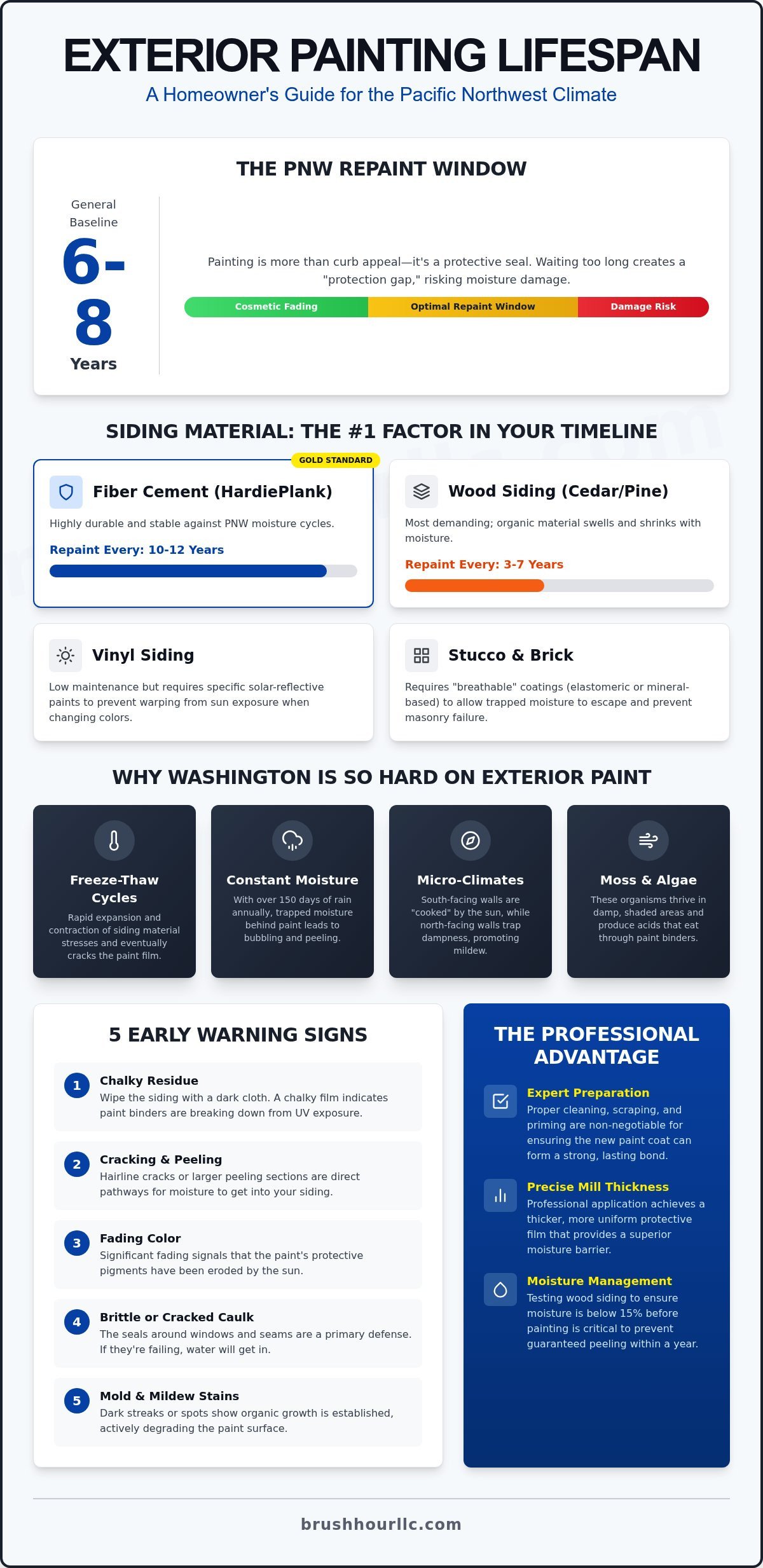
Is your home starting to look a little tired after a few long winters? Determining how often to paint house exterior in Washington is about more than just looking at a calendar. For most homeowners in the Pacific Northwest, the standard baseline is every 6 to 8 years. However, a true “average” is hard to find because our local weather is so specific. Your home’s unique environment determines its needs. Factors like your siding material, how much direct sun hits your walls, and the density of the shade on your lot all change the rules for maintenance.
Why does this timing matter so much? When you wait too long, you create a “protection gap.” This is the dangerous interval where your paint is no longer acting as a waterproof seal. In a rainy climate like ours, a failed seal leads to moisture seeping into your siding, which can cause wood rot or fiber cement swelling. This damage quickly eats away at your home’s market value and curb appeal. The Repaint Window is the critical period between cosmetic fading and the moment your siding becomes structurally vulnerable to moisture.
The 5-Year vs. 10-Year Reality
Why do some homes in Battle Ground need a refresh every 5 years while others in the same neighborhood last 12? It often comes down to the quality of the last application. Professional-grade coatings applied by a skilled painting contractor create a thicker, more resilient film than standard DIY-grade options. If your home is highly exposed on a hill, it will face more wind-driven rain and UV damage than a sheltered house. You can determine where you fall on the timeline by checking for “chalking” or small cracks in the caulking. A house with high-quality paint and professional prep work will always stay on the longer end of that 10-year spectrum.
Why Washington is Harder on Paint Than Other States
Washington is notoriously tough on exterior finishes. Our “freeze-thaw” cycles in Clark County cause building materials to expand and contract rapidly; this movement stresses the paint film until it eventually snaps. With over 150 days of rain annually, humidity is a constant threat to paint adhesion. If moisture gets trapped behind the film during a damp spring, the paint will eventually bubble and peel away. Additionally, moss and algae thrive in our shaded, damp areas. These organisms produce organic acids that literally eat through the binders holding your paint together, making regular cleaning and inspection essential for survival.
Siding Material: The #1 Factor in Your Repainting Timeline
What is the single biggest variable in your home’s maintenance schedule? It isn’t just the rain; it is the material actually protecting your walls. When you are calculating how often to paint house exterior in Washington, you must start with your siding type. Each material reacts differently to our high-humidity environment, and ignoring these differences can lead to expensive siding repairs.
- Wood Siding (Cedar/Pine): This is the most demanding material. It typically requires a fresh coat every 3 to 7 years because organic fibers are prone to swelling and shrinking as the seasons change.
- Fiber Cement (HardiePlank): This is highly durable and often lasts 10 to 12 years when applied correctly by a professional.
- Vinyl Siding: While low maintenance, it requires specific solar-reflective paints. Using the wrong product when changing colors can lead to permanent warping in the summer sun.
- Stucco and Brick: These materials need “breathable” mineral-based or elastomeric coatings. In the PNW, trapping moisture behind a non-breathable film is the fastest way to cause masonry failure.
The Cedar Siding Challenge in Vancouver
Do you live in a classic cedar-sided home? Cedar is iconic in Vancouver, but it requires a specialized approach to stay healthy. The natural oils in the wood, known as tannins, can bleed through the surface and create dark, tea-colored stains. This happens most often when a contractor skips the essential stain-blocking primer. You also face a choice between staining and painting. Stains need more frequent touch-ups, usually every 3 to 5 years, while a high-quality paint job lasts a bit longer. Before we start any wood project, we ensure the moisture content is below 15%. Applying paint over damp wood is a guaranteed way to see peeling within a single season.
Fiber Cement: The Gold Standard for Longevity
Why has fiber cement become the preferred choice for Battle Ground’s climate? It offers incredible stability against our wet-and-dry cycles. If your home features factory-primed siding, your first repainting cycle might comfortably reach the 12-year mark. The secret to this longevity isn’t just the board itself; it’s the seal. We often find that “caulk failure” at the butt joints and trim lines occurs years before the paint actually fails. If you notice gaps in your caulking, moisture can sneak behind the boards and cause hidden damage. If you want to ensure your barrier is still holding strong, consider a professional exterior painting assessment to catch these small gaps before they become big problems.
The PNW Moisture Trap: Why Washington Homes Fade and Peel Faster
Why does one side of your house look brand new while the other is already peeling? In the Pacific Northwest, we deal with a unique moisture trap that makes the question of how often to paint house exterior in Washington more complicated than a single number. It’s a combination of relentless dampness and surprising solar intensity. Your home essentially faces two different climates at the same time, depending on which way the walls are facing.
Your south-facing walls in Vancouver take a heavy beating. Even during our milder summers, the sun “cooks” the paint film. This process leads to chalking, where the protective binders in the paint break down and leave a powdery residue on the surface. On the flip side, your north-facing walls are the “shade trap.” Without sun to dry them out, moisture sits on the siding for months. This is where moss and mildew thrive; they don’t just sit on the surface, they actually eat through the paint layers over time.
Proximity to the Columbia River adds another layer of difficulty. The constant high humidity increases the risk of surfactant leaching, which shows up as sticky, brown streaks on your siding. Your specific neighborhood matters, too. A home tucked into a wooded Battle Ground lot ages differently than a house in an open Vancouver suburb. Trees trap moisture and drop organic debris, which accelerates the breakdown of your protective coating and shortens your maintenance cycle.
UV Damage and Color Retention
Don’t let those gray, overcast days fool you. UV rays still penetrate the clouds and contribute to the breakdown of paint pigments. If you’ve chosen a dark, trendy color, your home will absorb more heat. This causes the siding to expand and contract more aggressively, which eventually leads to tiny stress cracks in the finish. High-quality resins in modern paint are designed to resist this “bleaching” effect, but even the best products eventually succumb to the PNW sun if they aren’t maintained.
The Biology of Paint Failure
Is that dark spot on your siding just dirt, or is it alive? In our climate, it’s usually the latter. Mildew and mold are biological threats that root themselves directly into the paint film. These organisms create microscopic entry points that allow water to bypass your home’s protective seal. Once water gets behind the film, the paint starts to lift and peel. You can learn more about stopping these biological invaders in our Exterior House Painters guide, which details how we protect your curb appeal from the elements.
5 Warning Signs It’s Time to Repaint (And How to Delay It)
Is your home trying to tell you something? Walking around your property once a year is the best way to determine how often to paint house exterior in Washington for your specific needs. You don’t have to be a professional to spot the red flags. By catching these signs early, you can often avoid the structural damage that leads to massive repair bills.
- Chalking: Run your hand across a sun-exposed wall. If it leaves a powdery, white residue on your skin, the paint’s resin has broken down. The protective seal is officially gone.
- Cracking and Peeling: This is the “red alert” stage. If you see bare wood or fiber cement peaking through, moisture is already finding its way into your siding.
- Fading: Fading isn’t just a cosmetic issue. It indicates that the UV protection has been depleted and the paint film is becoming thinner and more brittle.
- Gaps in Caulking: Look closely at the corners and window frames. Hairline cracks in the caulk are the first line of defense to fail, allowing water to seep behind your siding.
- Bubbling (Blistering): These small bubbles mean moisture is trapped behind the paint and is trying to escape. This usually points to a failing seal elsewhere on the house.
The ‘Annual Wash’ Maintenance Strategy
Did you know you can actually delay a full repaint by staying on top of cleaning? A gentle, low-pressure wash every spring can add up to two years to your paint job’s lifespan. This process removes the dirt and Clark County moss that hold moisture against your finish. However, you must avoid high-pressure washing. Using too much force can inject water directly into your siding or blast away the remaining protective film. Keep it low and slow to keep your finish healthy.
Spot Repairs vs. Full Repaints
Do you really need to repaint the whole house? Sometimes the answer is no. If the damage is limited to just your trim or one sun-scorched south wall, a spot repair might be enough. We typically follow the “Rule of 10%.” If more than 10% of the total surface area shows signs of failure, a full repaint is the most cost-effective way to ensure your entire structure is protected. You can find more details on these symptoms in our guide on 5 Signs You Need to Repaint Your House Exterior. If you aren’t sure where your home stands, reach out to a professional house painter for an honest assessment of your siding’s health.
Why Professional Application Extends Your Paint’s Life in Clark County
Did you know that the secret to a long-lasting finish isn’t actually the paint itself? It is the work that happens before the first drop of color ever touches the wall. When you are looking at how often to paint house exterior in Washington, the quality of the application is what determines if you’ll be repainting in four years or ten. Professional application provides a structural advantage that DIY projects simply cannot match.
Preparation is 90% of our process. In our damp climate, we don’t just paint over old problems. We perform rigorous scraping and sanding to ensure the new coating has a perfectly smooth, clean surface to grip. Then there is the “Mill Thickness” advantage. Using professional-grade sprayers allows us to build a uniform, protective barrier that is exactly the right thickness to withstand wind-driven rain. If the film is too thin, it fails early. If it’s too thick, it can actually crack. We get it just right every time.
We also remove the guesswork with scientific moisture testing. We never start a project until our meters confirm the siding is truly dry. This prevents the trapped moisture issues we discussed earlier. As a licensed and insured painting contractor, we provide the peace of mind that your investment is fully protected by expert craftsmanship and professional property protection.
The Brush Hour LLC Difference in Vancouver and Battle Ground
Why choose a local expert? We understand the specific challenges of homes in neighborhoods across Vancouver and Battle Ground. We time our projects carefully around the “Magic Window” of Washington weather, typically from June to September, to ensure perfect curing conditions. If you are ready to find the right partner for your project, check out our guide on how to hire a painting contractor.
Ready for a Fresh Start?
Waiting too long to address a failing finish is a gamble that rarely pays off. Siding replacement is significantly more expensive than a timely repaint. Understanding how often to paint house exterior in Washington is the first step, but taking action before the moisture sets in is what saves your siding. Why risk structural damage when a professional inspection can tell you the true health of your home’s exterior? Let’s make sure your siding is ready to handle whatever the next PNW winter throws at it. If you want to secure your home’s future, get a professional exterior quote from Brush Hour LLC today.
Secure Your Home’s Defense Against the PNW Elements
Are you ready to stop worrying about moisture and start enjoying a home that looks brand new? Protecting your property in the Pacific Northwest requires more than just a fresh coat of color; it requires a strategic shield against our unique weather cycles. By understanding how often to paint house exterior in Washington based on your specific siding and micro-climate, you are taking the most important step in preventing costly structural damage. Remember that catching early signs like chalking or failing caulk today can save you from a full siding replacement tomorrow.
We are here to help you navigate these decisions with confidence. As local Vancouver and Battle Ground experts, Brush Hour LLC brings precision craftsmanship and property protection to every project. We are fully licensed, bonded, and insured in Washington, so you can rest easy knowing your investment is in safe hands. Don’t wait for the next rainy season to discover a leak. Schedule Your Free Exterior Painting Consultation with Brush Hour LLC and let’s revitalize your home together. We look forward to being your partner in keeping your home beautiful and protected for years to come.
Frequently Asked Questions
How often should you paint a house in Washington state?
Most homes in our region require a fresh coat every 6 to 8 years. This timeline for how often to paint house exterior in Washington shifts based on your siding material and how much shade your lot has. Wood siding often needs care every 3 to 7 years, while fiber cement can last much longer. Staying ahead of this schedule is the best way to prevent moisture from reaching your home’s structural layers.
Does the rain in Vancouver, WA make paint peel faster?
Constant moisture and high humidity definitely accelerate paint failure in Vancouver. When rain sits on your siding for months, it can seep into small cracks or behind the paint film. This causes the paint to lose its grip and eventually peel away. We focus on high-quality moisture-resistant coatings to combat this local challenge. Keeping your gutters clean also helps by preventing water from cascading down your walls during heavy storms.
What is the best time of year to paint a house exterior in Washington?
The ideal window for exterior painting in Washington is typically from June through September. During these months, we see less rain and more consistent, moderate temperatures that allow the paint to cure properly. We always monitor the local forecast and siding moisture levels before we begin. Painting in late spring or early fall is sometimes possible, but we must ensure the surface is scientifically dry before the first coat is applied.
How long does paint last on HardiePlank siding in the PNW?
Paint on HardiePlank or fiber cement siding usually lasts between 10 and 12 years in our climate. This material is incredibly stable and doesn’t expand or contract as much as natural wood, which helps the paint film stay intact. However, the caulking at the joints often fails sooner. We recommend a professional inspection every 5 years to check those seals and ensure moisture isn’t sneaking behind your durable siding boards.
Can I paint my house exterior in 40-degree weather in Battle Ground?
We generally advise against painting in 40-degree weather in Battle Ground. Most modern exterior paints require a minimum temperature of 50 degrees Fahrenheit to form a proper protective film. If the temperature drops too low during the drying process, the paint won’t bond correctly to the surface. This leads to premature peeling and a finish that lacks the durability needed to survive a wet Washington winter. It’s always better to wait for a warmer window.
Is it better to stain or paint cedar siding in Washington?
Both options have benefits, but paint offers superior moisture protection for cedar homes in the Northwest. A high-quality paint job usually lasts 5 to 7 years, whereas stain often needs a refresh every 3 to 5 years. If you choose paint, we always use a tannin-blocking primer to prevent those dark wood oils from bleeding through. Stain is beautiful for a natural look, but it requires much more frequent maintenance to keep the wood sealed.
Why is my exterior paint chalking after only 4 years?
Chalking is caused by UV rays breaking down the resins and binders in your paint. If you notice a powdery residue after just 4 years, it’s likely due to intense sun exposure on your south-facing walls. Lower-quality paints or thin applications also contribute to early chalking. Using professional-grade coatings with high resin content is the best way to ensure your color and protection last through the full 8-year cycle we expect in Clark County.
Do I need to prime my whole house before repainting?
You don’t always need to prime the entire house, but spot priming is essential for a lasting finish. We always prime any bare wood, fiber cement, or areas where the original paint has peeled away. This ensures the new topcoat adheres properly and prevents moisture from reaching the substrate. If you are changing colors drastically or dealing with heavy staining, a full coat of primer might be necessary to ensure uniform color and maximum protection.