
What if the “money-saving” DIY project you started on Saturday morning ends up being the most expensive mistake you make this year? When you’re weighing the choice of hiring a painter vs DIY, it’s easy to focus only on the price of a few gallons of paint. You want a home that feels fresh and revitalized, and doing it yourself feels like a great way to save. But does the math actually work out when you factor in your precious free time and the risk of an amateur finish?
It’s true that the lure of a lower price tag is strong, especially when you’re excited about a home transformation. We understand that you want to protect your property value while keeping your budget in check. This guide will uncover the hidden expenses of DIY, from high-end equipment to the grueling hours of prep work. You’ll learn exactly when to tackle a room yourself and when it’s time to call a professional house painter. We’re breaking down the 2026 cost of supplies and the “painter’s regret” that often sets in halfway through a project so you can make the right call for your home.
Key Takeaways
- Understand the “80/20 Rule” of painting and why professional preparation is the secret to a finish that lasts for years.
- Compare the hidden expenses of hiring a painter vs DIY to see if those “savings” actually cost you more in the long run.
- Use our three-step checklist to evaluate your home’s specific needs before you commit to a DIY weekend.
- Learn how to protect your home’s resale value by avoiding common amateur mistakes and “painter’s regret.”
- Discover why local expertise in Vancouver is essential for choosing materials that stand up to Pacific Northwest weather.
The Great Debate: Should You Pick Up the Brush or the Phone?
Have you ever stood in the paint aisle, staring at a rainbow of swatches, and wondered if you’re about to save a fortune or lose your entire month? It’s a common crossroads for homeowners. On one side, there’s the “weekend warrior” dream of a DIY project. On the other, there’s the streamlined efficiency of a professional painting contractor. When debating hiring a painter vs DIY, most people start by looking at the price of a gallon of paint, but the true cost goes much deeper than the receipt from the hardware store.
Why does a two-day project so often turn into a month-long ordeal? It usually comes down to the “Total Project Cost.” This includes the specialized tools you’ll only use once, the hours spent on hands and knees scrubbing baseboards, and the inevitable “mistake tax” when a spill happens or a color doesn’t look right on the wall. While the pride of doing it yourself is a powerful driver, it often clashes with the reality of living in a construction zone for weeks. Is the stress of a messy living room worth the potential savings? For many, the peace of mind that comes with a guaranteed timeline is the real luxury.
What Does “Professional Quality” Actually Mean?
Is there really a difference between a “covered wall” and a “flawless finish”? Absolutely. A professional result isn’t just about getting color on the surface; it’s about the physics of the application. Understanding the basics of paint composition helps you realize that uniform sheen and razor-sharp cut-in lines at the ceiling don’t happen by accident. They require specific pressure, the right humidity, and years of muscle memory. Have you noticed how some DIY jobs look great at noon but show every roller mark and lap line once the evening sun hits the wall? Professional lighting and high-end equipment reveal these errors before the job is even finished, ensuring your home looks polished from every angle, all day long.
The Tipping Point: When DIY Becomes Risky
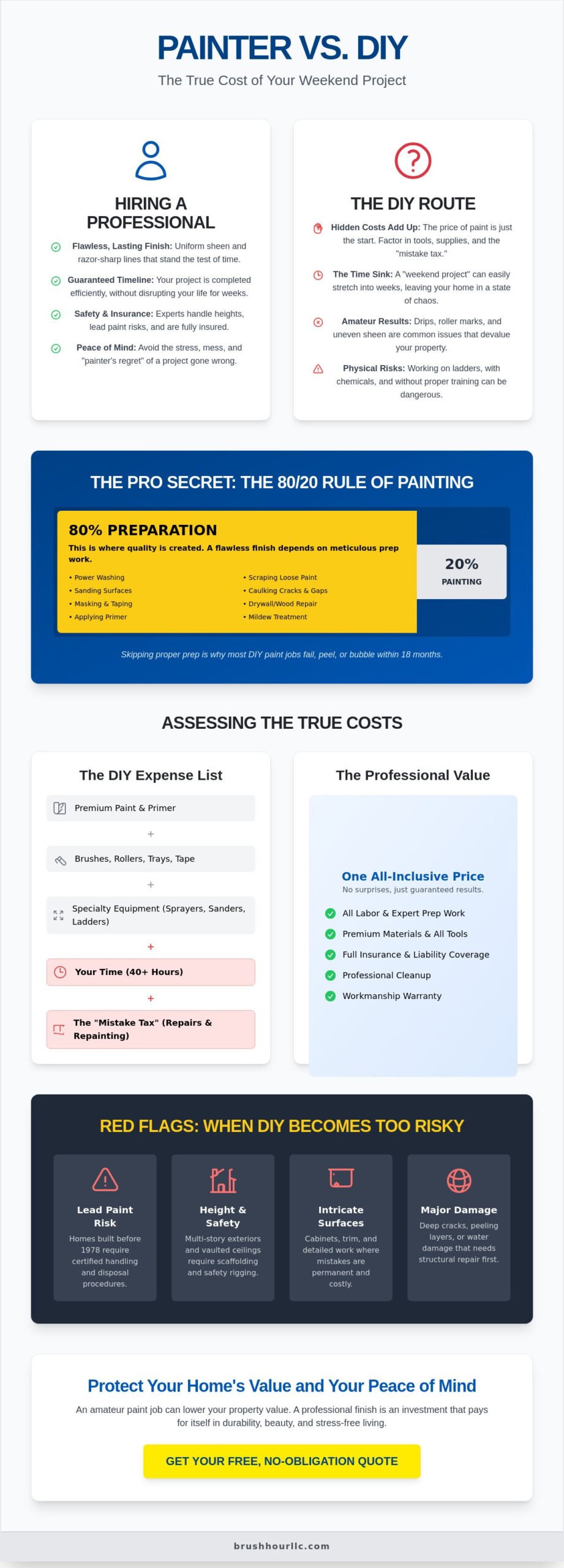
When does a simple refresh turn into a liability? There are specific red flags that suggest you should put down the roller and call in the pros. If your home was built before 1978, you might be dealing with lead paint risks that require certified handling. Physical safety is another huge factor. Balancing on a ladder to reach vaulted ceilings or navigating the steep peaks of a home exterior in the Vancouver heat can be genuinely dangerous without the right safety rigging. This is exactly why professional wall painting is the strategic choice for complex layouts or homes requiring extensive drywall repair. If the project involves any of the following, the risk to your safety and your property value often outweighs the DIY savings:
- Multi-story exteriors that require industrial-grade scaffolding.
- Intricate trim and cabinetry where mistakes are permanent and expensive.
- Significant surface damage like deep cracks or peeling layers that need mechanical sanding.
The Hidden “Prep-to-Paint” Ratio: Why DIY Takes Longer
Ever wonder why a professional crew spends three days on your house before even opening a lid of paint? It’s because of the 80/20 rule. In the world of high-end finishes, 80% of the result happens before the brush ever touches the wall. When you’re hiring a painter vs DIY, you aren’t just paying for the color. You’re paying for the washing, scraping, sanding, and caulking that ensures the color actually stays there. Many DIYers feel the urge to start painting immediately to see progress. Unfortunately, skipping these steps is exactly why many home-painted projects start peeling or bubbling within 18 months.
Homeowners in Clark County face a unique challenge we call the “Vancouver Factor.” Our consistent moisture and high humidity levels create a breeding ground for mildew and algae, especially on the north-facing sides of homes. A professional house painter knows that you can’t just paint over these issues. They require specialized cleaning and treatment to ensure the new coat doesn’t fail. When weighing the true costs of your time, consider if you’re prepared to spend your entire weekend on a ladder with a scraper and a wire brush.
Surface Preparation: More Than Just Blue Tape
Proper prep involves more than just masking off the windows. If you have old oil-based paints on your trim, applying modern latex directly on top will lead to immediate failure. You have to de-gloss the surface first. You also need to look for “alligatoring,” which is a pattern of cracking that indicates previous coats are failing. Professionals sand these areas down to a sound surface to create a mechanical bond. A mechanical bond refers to the physical interlocking of the paint film with the microscopic texture of the prepared surface. Without it, your new paint is just a temporary mask.
The Equipment Gap: Consumer Grade vs. Professional Grade
The tools you find at a local hardware store are rarely the same ones the pros use. Standard consumer-grade rollers often hold less paint and create more splatter, leading to an uneven “orange peel” texture. On the other hand, a professional-grade high-capacity cover allows for a smoother, thicker application. Have you considered the learning curve of an airless sprayer? While they’re fast, they require precise technique to avoid “runs” or accidentally painting your neighbor’s fence with overspray. When you factor in the cost of renting scaffolding or buying 24-foot extension ladders, the financial gap between hiring a painter vs DIY starts to shrink significantly. If the thought of spending your Saturday on a high-reach ladder feels daunting, a professional team can handle the heights while you enjoy your weekend.
Assessing the True Costs: DIY Expenses vs. Professional Value
When you look at a quote from a painting contractor, it’s easy to experience a bit of sticker shock. You might think, “I could buy a few cans of paint and do this myself for a fraction of the price.” But have you actually priced out the receipt lately? When hiring a painter vs DIY, the financial gap is often much smaller than it appears on the surface. Beyond the paint itself, which can range from $20 to $80 per gallon for premium brands, you have to stock an entire inventory of supplies. Brushes can cost up to $20 each, rolls of high-quality tape are $10, and a sturdy ladder can set you back $300. These costs add up before you even apply the first coat of primer.
There is also the “Mistake Tax” to consider. Professional painters know exactly how much coverage a gallon provides, typically 350 to 400 square feet. A DIYer using consumer-grade rollers often applies paint unevenly, leading to poor coverage that requires an unexpected third or fourth coat. Suddenly, you’re back at the store buying more expensive paint. If a DIY job starts to peel next year because of a prep error, you have to pay for the materials all over again. A professional team provides a warranty, giving you the security that the job is done right the first time. To truly understand the value, it helps to spend time understanding painting contractor quotes to see exactly where your money is going.
Calculating Your “Hourly Rate” as a DIYer
Think about your last free Saturday. How much is that time worth to you? To find your true DIY cost, take the money you think you’re saving and divide it by the hours you’ll spend on the project. If you save $300 but spend 20 hours prepping and painting, you’ve essentially hired yourself for $15 an hour. Is that a fair wage for your only days off? Most homeowners find that the “opportunity cost” of missing family events or much-needed rest is far higher than the labor fee on a professional bid. When you hire a pro, you aren’t just buying paint on a wall; you’re buying your weekend back.
Insurance, Liability, and the Safety Factor
Safety is perhaps the most overlooked part of the hiring a painter vs DIY debate. There are several key factors to consider before climbing a ladder, especially on multi-story homes. Falls from ladders are a leading cause of home improvement injuries. Are you comfortable navigating a 24-foot extension ladder while carrying a heavy bucket? In Washington state, hiring a licensed and insured contractor protects you from liability if an accident occurs on your property. Before signing any contract, make sure you know how to find licensed and insured painters near me and verify their credentials through the Washington Department of Labor and Industries. Professionals also know how to handle hazardous materials and dispose of waste properly, keeping your home and the local environment safe. Peace of mind is difficult to put a price tag on, but it’s often the most valuable part of the project.
The DIY Feasibility Checklist: Should You Pick Up the Brush?
Are you still on the fence about picking up a roller this weekend? Making the final call between hiring a painter vs DIY doesn’t have to be a guessing game. Before you head to the hardware store in Vancouver or Battle Ground, run through this quick feasibility audit. It’ll help you decide if your project is a fun weekend task or a recipe for “painter’s regret.” Every home is different, but the logistical demands of a quality finish remain the same.
- Step 1: Evaluate the Surface Condition. Is the current paint just dated, or is it actively peeling? If you see flakes or bubbles, you’re likely dealing with Pacific Northwest moisture trapped under the surface. This requires specialized mechanical sanding that most homeowners find exhausting.
- Step 3: Check the Timeline. Do you have 40 or more hours of focused time? A single room often takes a DIYer 6 to 10 hours. Painting an entire interior isn’t a weekend job; it’s a month-long commitment for most families.
- Step 4: Audit Your Tools. Do you already own the $300 or more in supplies needed? If you’re starting from scratch with brushes, drop cloths, and tape, your initial investment might be closer to a professional’s labor fee than you think.
- Step 5: Define the Goal. Is this a quick refresh for a rental property? Or is this your “forever home” where you want a flawless, high-end finish? Your desired outcome should dictate who holds the brush.
Ideal DIY Projects for Beginners
If you’re eager to try your hand at painting, start small. Powder rooms or small bathrooms are perfect because they have limited wall space. Accent walls are another great choice. They allow you to experiment with bold colors without the overwhelming task of painting an entire floor. You might also consider refreshing old furniture or decorative trim. These projects are low-risk. They provide that sense of accomplishment without the physical toll of a large-scale project.
When to Absolutely Call a Professional
Some jobs are simply too complex or dangerous for the average homeowner. For example, exterior house painting on multi-story homes requires industrial safety equipment and knowledge of local weather windows. Kitchen cabinet refinishing is another area where DIYers often struggle. It has the highest failure rate because of the precise cleaning and curing steps required. If you’re preparing your home for the market, an amateur finish can actually hurt your property value. In these cases, it’s smarter to contact a professional painting contractor to ensure the job is done right. Don’t risk your safety or your home’s aesthetic on a project that’s outside your comfort zone.
Why Brush Hour LLC is the Strategic Choice for Vancouver Homeowners
Ready to stop worrying about the mess and start enjoying the results? When you’re stuck in the middle of the hiring a painter vs DIY debate, what you’re really looking for is a partner you can trust with your biggest investment. At Brush Hour LLC, we bring precise craftsmanship and neighborly warmth to every project in Vancouver and Battle Ground. We don’t just see a house; we see your sanctuary. Our team understands the unique challenges of PNW siding and those tricky interior moisture issues that can ruin a standard paint job. Why spend your limited free time struggling with a roller when you can experience the excitement of a transformation without the stress?
Choosing a professional painting contractor shouldn’t feel like a gamble. We pride ourselves on being a helpful local expert who understands the common hesitations of home improvement. We know you want a beautiful home without the “painter’s regret” that often follows a DIY attempt. If you’ve decided that professional help is the right call but aren’t sure where to begin, our complete walkthrough on how to hire a painting contractor gives you a step-by-step framework for vetting professionals and protecting your investment. By choosing a local team that is deeply integrated into the community, you’re ensuring that your home receives the specialized care it deserves. We treat your property with the same respect we would our own, focusing on longevity and aesthetic excellence.
Our Process: From Precise Prep to Final Walkthrough
How do we ensure a flawless finish every time? It starts with a methodical interior painting workflow that prioritizes your comfort. We follow a strict clean workspace policy because we know how much you value your home. No paint on your carpets, no splatter on your hardwood, and no dust on your furniture. We also believe that reliable communication is the foundation of professional trust. You won’t have to deal with “ghosting” or late arrivals when you work with us. We stay in touch from the first brushstroke to the final walkthrough, ensuring every detail meets our high standards and your expectations. Our goal is to make the path forward feel simple and well-defined.
Ready for a Professional Transformation?
Are you ready to protect your property value and enjoy long-term protection? Expert results do more than just look pretty; they shield your home from the elements and daily wear. If you’re still exploring your options for your next project, take a look at our guide to residential painting near me. It helps you navigate the selection process with confidence and clarity. When you decide that the scale of hiring a painter vs DIY tips toward professional ease, we’re here to help. Contact us today for a stress-free quote and let’s bring your vision to life together. It’s time to give your home the fresh, renewed quality it deserves.
Ready to Reclaim Your Weekend and Revitalize Your Home?
Is your home ready for its next chapter? We’ve explored how the choice between hiring a painter vs DIY often comes down to more than just the price of a gallon of paint. You now know that professional prep work is the secret to a finish that lasts, and that your own time has a significant value. Why spend your limited days off on a ladder when you could be enjoying the results? Expert results protect your property value and ensure your home looks its best for years to come.
Brush Hour LLC has been providing 5-star local craftsmanship to families in Vancouver and Battle Ground since 2012. As a licensed and insured Washington contractor, we take the stress out of the process while protecting your property value. You deserve a home that feels fresh and renewed without the month-long ordeal of a DIY project. We’re here to be your partner in this transformation, offering professional reliability with a neighborly touch.
Get Your Free, No-Hassle Painting Quote from Brush Hour LLC Today!
Take the first step toward a beautiful home transformation today. We’re excited to help you bring your vision to life with ease and professional confidence. Let’s make your home shine again!
Frequently Asked Questions
Is it cheaper to paint a house yourself or hire a professional?
DIY painting is cheaper in terms of upfront cash for materials, but the true value depends on how you calculate the cost of your time. While you save on labor fees, you must buy or rent all your own tools, ladders, and drop cloths. When you consider the risk of mistakes or the need for a second coat due to poor technique, the gap between hiring a painter vs DIY often narrows significantly.
How much time does it take for a professional to paint a 2,000 sq ft house?
A professional crew typically completes a 2,000 square foot home in 3 to 5 business days. This timeline includes the deep cleaning and surface preparation that ensures a lasting finish. A solo DIYer often takes three to four times longer to achieve the same result. Professionals use high-capacity equipment and coordinated teams to minimize the disruption to your daily life.
What are the most common mistakes DIY painters make?
The most frequent error is rushing the preparation phase. Skipping the wash or sand steps leads to paint that peels within a year or two. DIYers also tend to use low-quality brushes that leave visible stroke marks or rollers that create an uneven texture. Using the wrong sheen for high-moisture areas like bathrooms is another common pitfall that leads to early failure in our specific climate.
Do I need a license to paint my own house in Vancouver, WA?
No, you don’t need a contractor license to perform work on your own primary residence in Vancouver. However, any professional you hire must be registered with the Washington Department of Labor and Industries. This registration protects you as a homeowner. It ensures the business is bonded and has the necessary insurance to work on residential properties safely and legally.
Should I buy my own paint if I hire a professional painter?
It’s usually better to let your contractor handle the paint purchase. Professionals have access to high-performance products that aren’t always available at local retail stores. They also receive contractor discounts that they can pass along to you. Most importantly, a professional knows exactly which primer and topcoat combination will bond best with your specific wall or siding material.
What is the best time of year to hire a painter in the Pacific Northwest?
Late fall and winter are ideal for interior projects because many local companies offer seasonal discounts during these months. For exterior work, the window between July and September is the most reliable time to ensure dry surfaces and proper paint curing. If you plan an interior refresh during the rainy season, you can often secure a spot on the schedule much faster than during the busy spring rush.
Can a professional painter fix bad DIY paint jobs?
Yes, professionals can correct previous mistakes, but it often requires more labor than a standard job. The crew will need to sand down uneven layers, strip away peeling paint, and re-prime the surface to create a smooth base. While it adds to the project time, fixing these errors is essential for protecting your property value and ensuring the new finish looks flawless and professional.
How do I know if a painting contractor is actually insured?
You should always ask for a Certificate of Insurance (COI) and verify the company through the Washington Department of Labor and Industries website. A reputable contractor will have no problem providing proof of both general liability and workers’ compensation insurance. For a step-by-step walkthrough of exactly what to request and how to confirm coverage, our ultimate verification checklist for licensed and insured painters near me walks you through the entire process. This verification ensures that you aren’t held liable for any accidents or property damage that might occur during the project.